

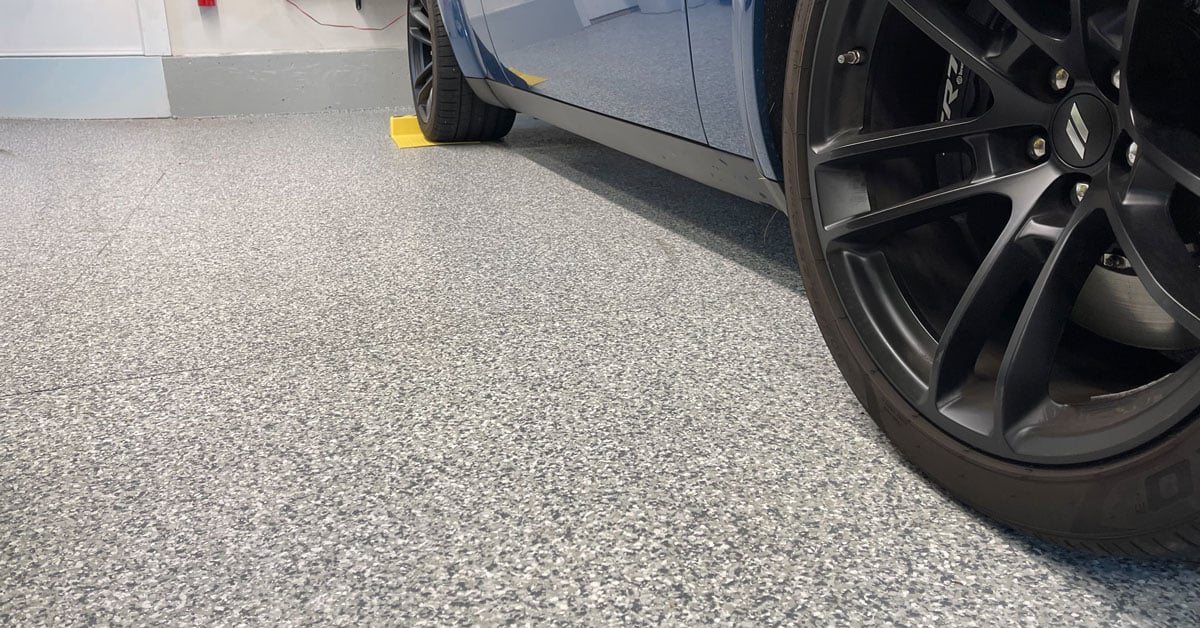
Professional garage floor coating installation is more than just mixing products and spreading them across concrete. Success comes down to understanding your materials, managing environmental factors, and using the right techniques to maximize efficiency.
Whether you're dealing with temperature extremes, looking to reduce material waste, or setting up a more productive work environment, these field-tested strategies will help you consistently deliver high-quality floors that perform for years.
Table of contents:
Cut the Waste
Experienced garage floor coating installers understand that wasted material directly impacts your bottom line. A single wasted gallon per job adds up to a significant expense for the season. Here’s how expert installers trim the waste.
Choose the Right Application Tools
Your squeegees, rollers and other tools directly determine coverage rates and material usage. Choose the right ones for material thickness and viscosity.Speed squeegees
- Available in 18" and 24" widths
- Color-coded for different application thicknesses
- Easy to clean and swap out between applications
Standard notched squeegees - Range from 1/16" and up in varying stiffness levels
- Ensure accurate, consistent coverage rates
- Critical for applying materials at the manufacturer-recommended thickness
Flat squeegees - Ideal for thin epoxy primers and for wiping coatings tightly
- Also used for some decorative applications and topcoats
- Some installers prefer magic trowels for similar applications
Rollers for back-rolling - Finish and smooth the coatings
- Thinner naps (3/16") apply thinner than thicker naps (1/4")
- Better for thin materials than high-solid or thicker products
Fresher tools save you money. For chip and flake broadcast floors, proper scraping creates even finishes and helps you hit coverage rates. Old, dull scrapers work inconsistently and cost you money in wasted material and labor time.
Hit Your Coverage Rates
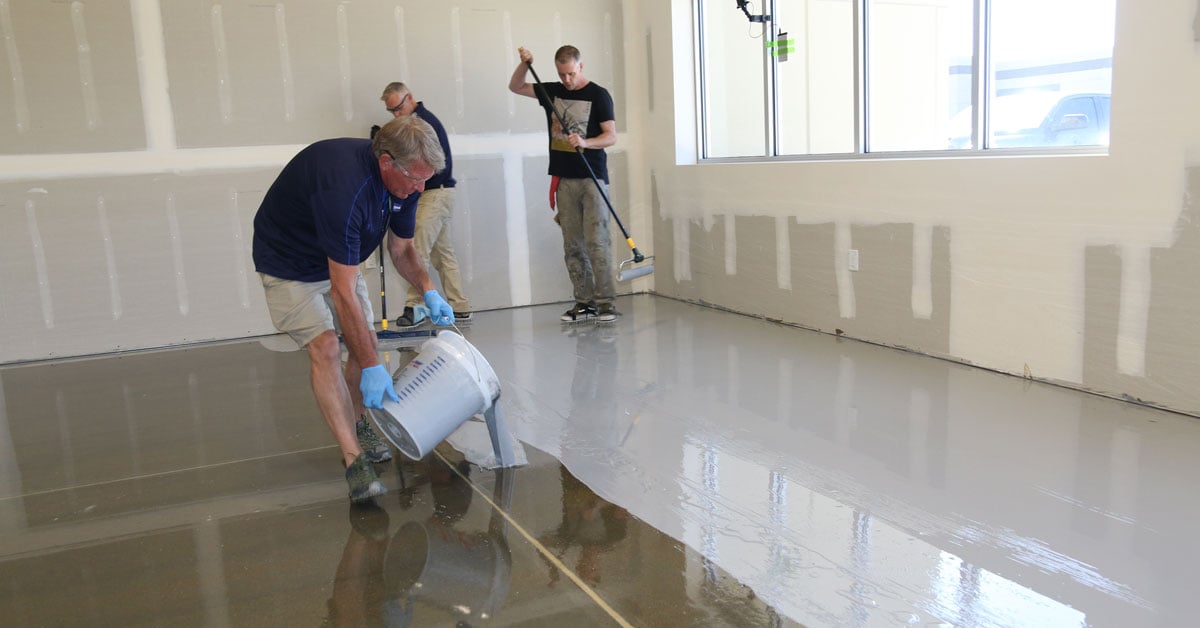
Applying a coating too thin or too thick is one of the top 10 mistakes for first-time garage floor installers. Proper material coverage ensures performance and profitability in garage floor coating installation. Your manufacturer should provide clear coverage recommendations for each step in your system.
- Low-solids water-based epoxy primers go on thinner than high-solids primers
- Vapor barrier epoxies have precise thickness requirements tied to their function
- Polyaspartics used as both broadcast coats and topcoats have different coverage rates at each step
After each coat, calculate your actual coverage against the square footage and intended coverage rate. If you're off, figure out why and adjust for future jobs.
Use Efficient Mixing Practices
Graduated buckets help you mix accurately to spec. Keep buckets clean between projects to prevent cross-contamination.
Make your mixing lines visible. For buckets of clear materials, use permanent marker. For pigmented materials where markings get covered, insert screws through bucket sides at appropriate levels — visible from inside even when coating obscures external markings.
Mix only what you can use. Never mix more than you can apply within the manufacturer's recommended working time.
Be Smart About Staging the Job
Pre-job organization prevents waste and keeps installations moving smoothly.
Before starting:
- Clearly separate and mark Part A and Part B components (including lids)
- Calculate total coverage needs
- Pre-measure all mixes for the project
- Stage everything for efficient workflow
- Keep extra material available if needed
Optimize Your Work Environment
Job satisfaction, beautiful finishes, and happy customers improve team morale and retention. Keeping a productive crew makes a real difference for your business.
Partner with Your Manufacturer
Working directly with an actual manufacturer like ResinWerks — not a white-label reseller — ensures transparency and proper support.
Example: As part of quality control, your garage floor coating manufacturer should maintain a fully functioning laboratory and production batch retention samples. If you run into unexplained issues, your manufacturer can quickly test their samples from your specific batch to look for product-related problems. This protects you and your clients.
Manufacturers must also provide GHIS-compliant safety data sheets covering material properties, safety precautions, storage, and shipping. This information must be completely transparent and readily available to you and your crew.
Use That Training and Technical Support
Ongoing training keeps your skills sharp and your business competitive. Look for manufacturers who provide:
- Comprehensive initial training on products and systems
- Ongoing education on new products and techniques
- Accessible technical support by phone and on-site
- Quick answers to questions about system design, specifications, and safety
Choose Installer-Friendly Products
Fussy materials that roller-mark easily or create finishing problems can be hard on team morale. After all the hard work of surface prep and application, a poor finish is discouraging.
Do your research to find products that give your team the best chance for consistent results, given your climate and typical job conditions.
Reduce Downtime With Fast-Cure Systems
Waiting for coatings to cure increases labor costs and inconveniences customers. Modern fast-cure epoxies and polyaspartics allow experienced professionals to:
- Reduce project timelines from 2-3 days to 1-2 days
- Trim your mobilization expenses
- Keep crews moving to the next job
- Give teams that sense of accomplishment from completed work
Use Low-VOC, Environmentally Responsible Products
Recent advances in garage flooring coatings offer alternatives that reduce harmful VOCs and eliminate hazards. Ensure your products comply with regional regulations and take advantage of green-friendly options that maintain a safe environment for your team and your customers’ property.
Provide Essential Personal Protective Equipment
Always follow manufacturer PPE recommendations when working with high-performance coatings.
Eye Protection
- Chemical goggles with side shields to prevent splashes
- Or goggles with 8-inch minimum full-face shield
Gloves
- Ethylene vinyl alcohol (EVOH) laminate, butyl rubber, nitrile rubber, or neoprene
- Never use cotton or latex gloves with epoxies
- Wash and dry hands before and after glove use with clean water, mild pH-neutral soap, and clean towels
Clothing
- Long pants and protective sleeves
- Heavy-duty boots with pants tucked in to prevent skin contact
Respirators
- Use according to manufacturer's limitations
- Follow OSHA Respirator Standard 29 CFR 1910.134
Manage the Impact of Cold, Heat and Humidity
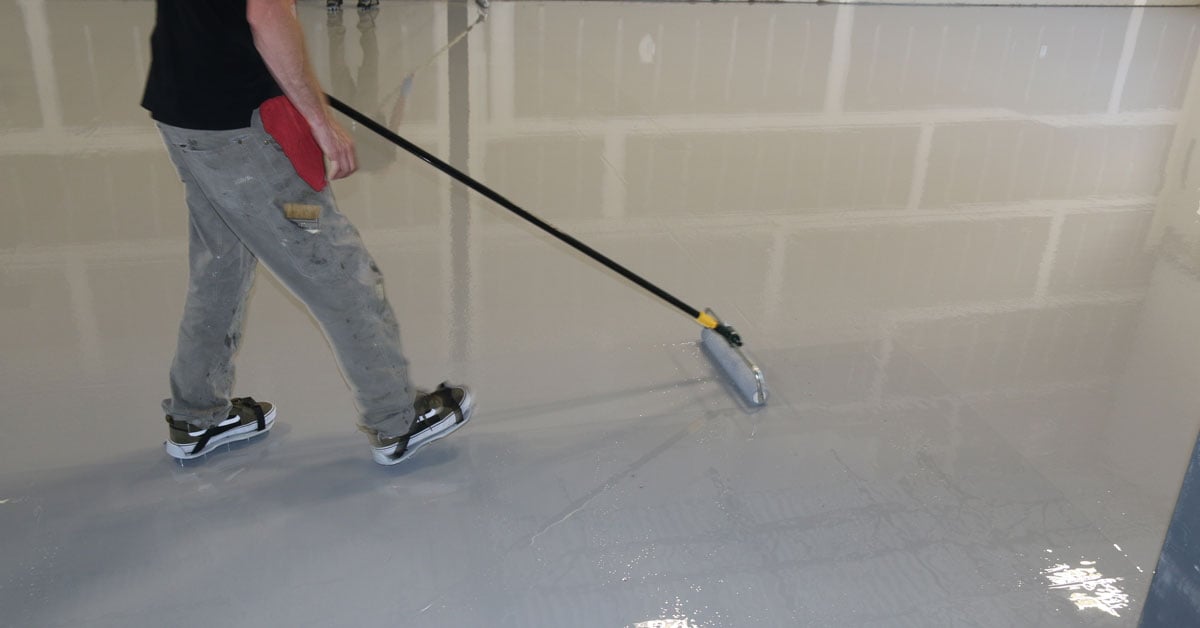
Environmental factors can make or break your garage floor coating installation. To avoid costly problems, know how temperature and humidity affect different coating types.
Epoxies
- Cure faster in warmer environments
- Water-based epoxies need to be applied in 60°F or warmer
- Some 100% solid epoxies work down to 40-50°F, especially fast-cure varieties
Urethanes
- Require a minimum of 50°F for proper curing
- This applies to both urethane topcoats and urethane cement systems used in commercial applications
- Lower temperatures mean slower curing and can compromise performance
Polyaspartic coatings
- Offer the widest temperature range
- Some can be applied below freezing
- Main challenge in cold weather: maintaining workable viscosity (store at room temperature before use)
Working in the Cold
When temperatures drop below recommended minimums, coatings may take far longer to cure — or may never fully cure at all, meaning can be damaged by chemicals.
Key considerations in the cold:
- Surface temperature matters more than air temperature
- Cold floors take significant time to warm up
- Areas near exterior walls or doors can remain problematic even when the room is warm enough
- Always bring materials to room temperature before application
Working in the Heat
High temperatures accelerate curing, which sounds good until you're dealing with reduced pot life and application issues.
Watch for these problems:
- Dramatically shortened working time windows
- Bubbling or blistering on extremely hot substrates
- Severely reduced pot life for material stored in hot trailers or direct sunlight
Best practice: Keep materials cool or at room temperature until you're ready to mix. Never leave products in hot vehicles or direct sunlight before installation.
If you're installing polyaspartic floors, which typically cure quickly, choosing the right slow-set polyaspartic coating can make a big difference.
Humidity: Respect the Dewpoint
Humidity levels affect working time windows, cure schedules, and long-term performance. Some materials actually use moisture as a catalyst, while others struggle in high-humidity conditions.
Never apply professional garage floor coating within 5°F of the dew point. This commonly occurs when rain is in the forecast and rising humidity causes condensation, often invisible to the eye.
Potential problems from ignoring the dew point;
- Coating bubbles from trapped moisture
- Orange-peel texture
- Pin-holing
- Adhesion failure
Amine Blush in Epoxies
High or rising humidity can cause amine blush, a waxy film and surface discoloration created when humidity reacts with epoxy resin. You might also see this when using propane tunnel heaters in cold weather because excessive carbon dioxide creates condensation.
Remove amine blush with soapy water and rinse, or use a solvent wipe. Left untreated, it will cause intercoat adhesion failures.
 Extended or Reduced Cure Times
- Water-based epoxies cure more slowly in high humidity
- Urethanes and polyaspartics cure faster in high humidity (moisture acts as a catalyst)
- Fast-curing polyaspartics in humid conditions may skin over before full cure, creating a cloudy finish (especially in corners and at wall bases where material builds up). Consider a slow-curing polyaspartic coating.
Bringing It All Together
Professional garage floor coating installation combines technical knowledge, proper equipment, environmental awareness and good planning. By understanding how different coatings respond to the environment, using the right tools and techniques to minimize waste, and creating an environment that enables your crew to perform at their best, you set yourself up for success.
The difference between a profitable, smooth-running installation business and one that struggles often comes down to these fundamentals. Master them, and you'll deliver exceptional results while building a sustainable, successful operation.