


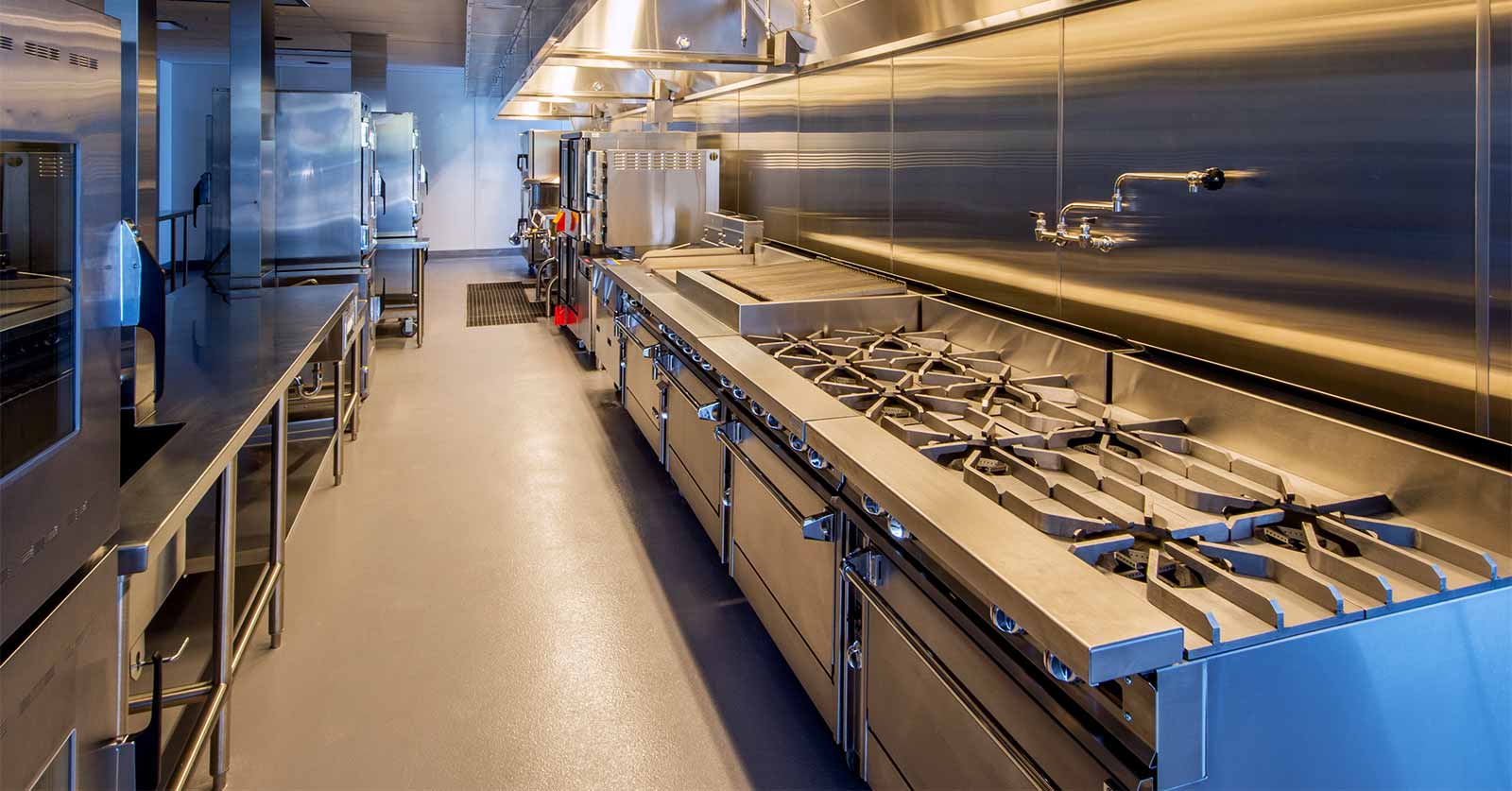
In food and beverage spaces, “clean” is more than a daily checklist. It’s a design issue.
Bacteria love the kind of environment found not just in commercial kitchens, but in breweries, bakeries, bottling plants, food prep rooms, cold storage, and processing areas — anywhere you have lots of moisture and organic materials.
This guide breaks down what to look for in antimicrobial kitchen flooring and how to keep its germ-fighting properties intact.
Table of Contents
Floors Don’t Just Get Dirty—They Can Become Hard to Sanitize
What Antimicrobial Kitchen Flooring Can — and Can’t — Do- How Does Antimicrobial Flooring Work?
- Can Antimicrobial Kitchen Flooring Prevent Mold and Bacteria?
- How Much Bacteria Is on Kitchen Floors?
What is the best commercial kitchen flooring?
- Seamed Floors Tend to Become Maintenance-Heavy
- Micro-damage Becomes a Sanitation Issue
- Why Seamless Systems Are so Common in Food and Beverage Settings
Match the Floor to the Mess: Choosing Flooring by Area
- Cook Line + Dish + Washdown Zones
- Prep Areas + Service Corridors
- Cold Storage + Transitions
- Breweries and Beverage Production
- Drains and wet details
Cleaning Routines That Backfire
Download the Food and Beverage Flooring Guide
Floors Don’t Just Get Dirty—They Can Become Hard to Sanitize
Most bacteria-related flooring issues aren’t caused by one dramatic spill. They’re caused by the same small conditions repeating daily:
- Moisture that lingers (washdowns, condensate, standing water near drains)
- Organic soil (grease, sugars, food particles)
- Places soil can hide (grout lines, open joints, rough transitions)
That’s why food facility guidance commonly emphasizes surfaces that are durable, easily cleanable, and nonabsorbent in areas subject to moisture.
What Antimicrobial Kitchen Flooring Can — and Can’t — Do
Let’s keep this grounded and useful.
Antimicrobial flooring is a system-level choice: the overall floor build and details that support sanitation — often seamless, non-porous, and cleanable — with optional antimicrobial additives.
An antimicrobial floor coating is typically a coating layer applied over a substrate. It can help, but it still depends on the integrity of what’s underneath and how the details are executed (joints, terminations, transitions).
How Does Antimicrobial Flooring Work in Kitchens (and Other Washdown Areas)?
Antimicrobial additives can help make the surface less hospitable to microbial growth. But in real facilities, the bigger day-to-day win is often simpler: reduce the hiding places.
If a floor has lots of seams, grout, or transitions that hold moisture and residue, the cleaning crew ends up “chasing” the problem forever. Seamless systems change the game by limiting where soil can lodge in the first place.
Can Antimicrobial Kitchen Flooring Prevent Mold and Bacteria?
It can help inhibit growth on the surface, but it’s not a substitute for strong routines of cleaning and disinfection. The most realistic way to think about antimicrobial flooring is as a support layer—it’s there to make sanitation easier to accomplish consistently, not to replace the sanitation program.
How Much Bacteria Is on Kitchen Floors?
It’s tempting to look at the scary numbers about foodborne illnesses, and floor sanitation is surely part of that equation. But for contractors, architects, and operators, the more useful question is: What conditions allow bacteria to persist?
In kitchens and other food & beverage facilities, it usually comes down to two things: persistent moisture, and soil trapped in hard-to-clean areas (seams, grout, cracks, transitions, around drains).
So instead of chasing a number, focus on selecting flooring that removes the conditions that let bacteria hang around.
What Is the Best Commercial Kitchen Flooring?
“Best commercial kitchen flooring” isn’t just what looks good on opening day. It’s what still performs after years of washdowns, traffic, spills, and repairs.
A few common failure paths show up again and again.
Seamed Floors Tend to Become Maintenance-Heavy
Quarry tile is a familiar option, but grout lines are the tradeoff. Over time, grout can degrade and become difficult to truly sanitize—especially in wet and chemically cleaned zones.
Micro-damage Becomes a Sanitation Issue
Even a floor that starts cleanable can become a problem if it develops:
- Hairline cracks
- Open joints
- Chipped edges at transitions
- Worn texture that traps residue
That’s the pivot point where cleaning gets more aggressive (stronger chemistry, hotter water, more abrasion), which often accelerates wear instead of solving it.
Why Seamless Systems Are so Common in Food and Beverage Settings
Seamless floors reduce the pockets and crevices where moisture can linger. That doesn’t just look cleaner—it makes cleaning more achievable during real shifts, with real crews.
This is also where polyurethane concrete systems earn their reputation in the food and beverage world. They’re often a strong choice when you need a seamless floor that can take the environment seriously: moisture, traffic, impacts, and the reality of aggressive cleaning methods. (More on choosing for those conditions in the checklist below.)
Match the Floor to the Mess: Choosing Flooring by Area
A single facility can behave like several different environments. Matching the system to the zone is one of the simplest ways to reduce long-term sanitation headaches.
Cook Line + Dish + Washdown Zones
What matters most:
- A surface that stays intact under frequent wet cleaning
- Resistance to oils/grease contamination and the cleaners used to remove them
- Details that don’t open up at edges and terminations
Prep Areas + Service Corridors
What matters most:
- Cleanability and appearance retention
- Slip resistance that stays consistent over time
Cold Storage + Transitions
What matters most:
- Moisture management (condensation, tracked-in water)
- Strong edge and termination details that don’t become weak points
Breweries and Beverage Production
What matters most:
- Constant moisture and spill cycles
- Traffic and rolling loads
- A surface that won’t become “sticky clean” from residue buildup
Drains and Wet Details
This is where floors fail quietly. Prioritize:
- Proper slope and drain integration
- Sealed transitions
- A cove approach that supports washdowns and reduces edge buildup
Food facility guidance frequently emphasizes nonabsorbent, easily cleanable surfaces in moisture areas—drains and surrounding wet zones are exactly where that matters most.
Cleaning Routines that Backfire
Cleaning is part of the spec, whether it’s written down or not. Some floors force operators into harsher cleaning habits over time — especially when soil and moisture get trapped in seams, grout, or worn texture.
If you want the practical “how to” side (including how to clean restaurant floors, how to disinfect kitchen floors, what tools and chemicals to avoid, and how certain cleaning approaches can shorten floor life), we break it down here: Is Your Cleaning Routine Ruining Your Commercial Kitchen Flooring?
How to Keep Antimicrobial Kitchen Flooring Performing Year After Year
Antimicrobial properties, and hygiene performance overall, depend on whether the surface stays intact and cleanable.
Three practical habits to build into your turnover conversation:
1. Protect the surface texture. Overly aggressive pads and brushes can change texture over time, affecting cleanability and slip resistance.
2. Rinse like it matters. Residue can attract soil and make tomorrow’s cleaning harder (the “looks clean, feels sticky” problem).
3. Inspect details early. Transitions, drains, and coves are early warning zones. Catch small openings before they turn into recurring sanitation pain.
Flooring Selection Checklist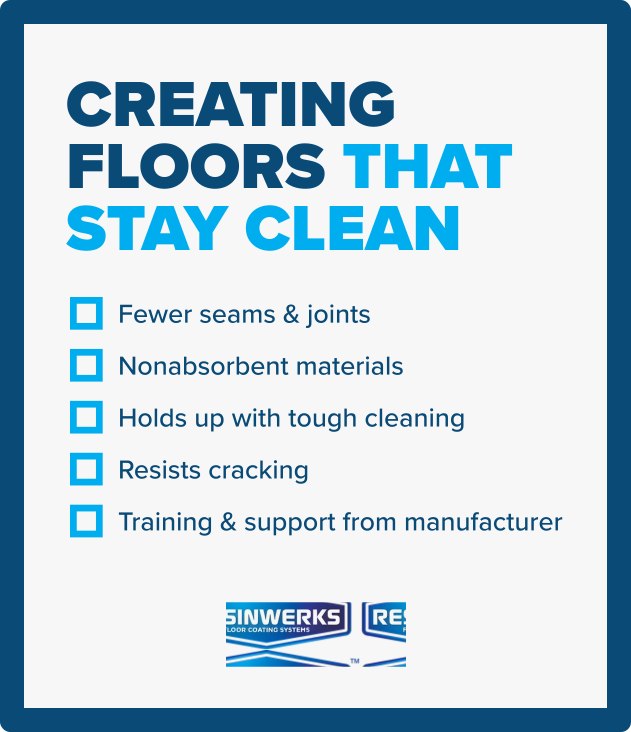
Here’s a plain-language checklist that helps contractors, architects, and operators compare solutions. It applies to commercial kitchens, breweries, and production floors, because the failure modes are similar.
1) Fewer seams, fewer weak points
Ask: Where can moisture and soil hide? The more seams and joints, the more “micro-zones” you’re asking cleaning crews to win every day.
2) Nonabsorbent and cleanable in wet areas
In moisture-heavy zones, you want surfaces that are durable, cleanable, and nonabsorbent — because absorbent materials don’t just stain; they hold onto the conditions microbes like.
3) Withstands real-world cleaning practices
Don’t plan for an ideal cleaning routine. Plan for the realistic one. A great antimicrobial kitchen flooring system should be forgiving: easy to rinse, easy to reach edges, and able to withstand sometimes-harsh cleaning without rapid wear.
If the facility uses methods that tend to damage floors (hot water, steam, aggressive degreasers, frequent disinfecting), choose a flooring system known for holding up under those conditions. This is a big reason polyurethane concrete systems are frequently specified in food and beverage environments.
4) Resists cracking, chipping, and edge failure
Cracks aren’t just cosmetic in food environments. Under heavy traffic and hard impacts, they become collection points. Prioritize systems and details that minimize brittle failure — especially at transitions, drains, and terminations.
5) Training and support for installation and maintenance
A great flooring choice can still underperform if the details are vague or the owner isn’t told what to avoid. Look for clear guidance on transitions, coving, drains, and compatible cleaning methods—so the floor stays cleanable long after turnover.
Download the Food and Beverage Flooring Guide
If you’re comparing antimicrobial flooring options across commercial kitchens, breweries, and production spaces, the Food & Beverage Flooring Guide pulls the key considerations into one place—system selection, detailing, and what it takes to keep floors cleanable long-term.
